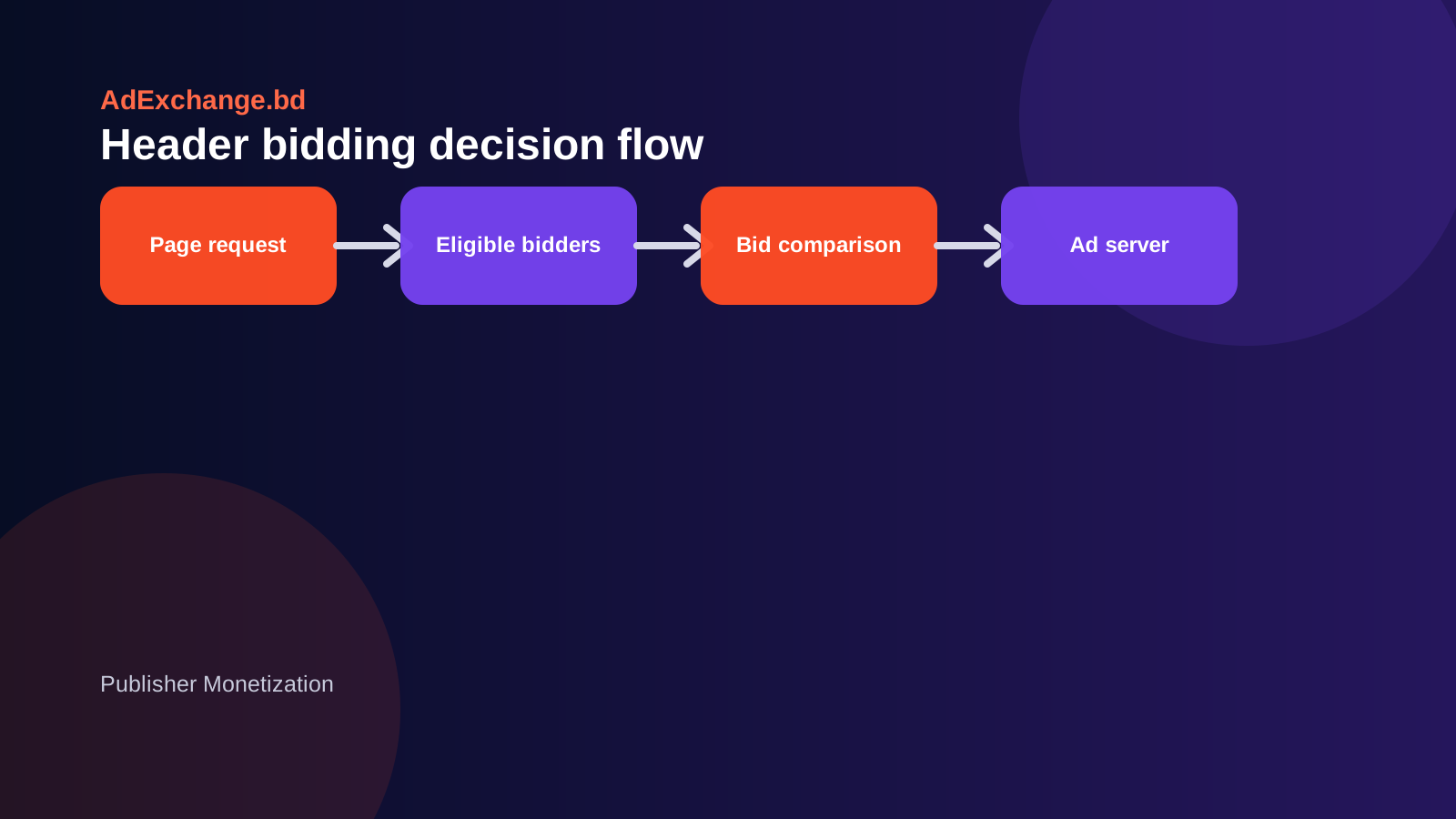
Quick answer
Header bidding can give multiple eligible demand sources an opportunity to compete for publisher inventory before or alongside an ad-server decision. Client-side and server-side approaches have different performance and operational tradeoffs.
Key takeaways
- Use measurable, interoperable advertising workflows.
- Keep reporting and operational ownership clear.
- Balance performance with privacy, quality and user experience.
What is header bidding?
Header bidding can give multiple eligible demand sources an opportunity to compete for publisher inventory before or alongside an ad-server decision. Client-side and server-side approaches have different performance and operational tradeoffs.
Why do publishers use it?
The main goal is useful demand competition and visibility. Publishers can compare eligible demand paths instead of relying only on a single sequential source.
What should be configured carefully?
Timeouts, bidder configuration, placement mapping, consent signals, price handling and reporting require deliberate configuration. More bidders do not automatically mean better monetization.
How should success be measured?
Evaluate revenue together with latency, fill, bid participation, discrepancies, user experience, inventory quality and operational overhead. A sustainable setup should remain measurable and manageable.
Further reading
For protocol and implementation details, use primary standards and documentation relevant to the technology being implemented.